A fitted dress, sewn.
Princess or dart shaping, a natural waist, clean fitted lines. The fabric holds the fit; the order keeps the seams crisp.
Which fabric, and why.
For this shape, look for a medium, crisp woven that holds its shape. The fitted seams and the stand-away shape read as clean lines only if the cloth holds them; a fluid fabric goes limp and the fitted lines collapse.
| families | cotton poplin, linen, wool suiting or gabardine |
| ask for | crisp and holds a fold; about 120 to 200 g/m² for a dress, up to about 300 for a structured skirt |
| trade-off | crisp cloth creases (linen especially) and needs pressing as you go. |
Preshrink washable cotton and linen before cutting: wash and dry them the way you will launder the finished garment. Fabric sold as preshrunk shrinks very little.
More on fabric for this shape →
The order it comes together.
Build flat for as long as you can: every seam is easier to sew and press while the piece is still open. Close it into a tube (side seams, sleeves) only near the end.
- Prep. Check your measurements against the pattern, print it at true scale and measure the calibration square, cut every piece as labelled (on fold / cut 2), and make a toile first if the fit matters.
- Stabilise. Staystitch curved raw edges so they cannot stretch; fuse interfacing to facings, collars and plackets while flat.
- Shape. Sew the darts or princess seams and form the gathers first, while each panel is still flat and single.
- Neck finish. Sew the shoulders, then attach and understitch the facing, set the collar, or run the binding while it still opens flat.
- Close the tube. Sew the side seams, set in the sleeves, add the straps.
- Skirt + join. Sew the skirt (leave the centre back open for the zipper), join it to the bodice at the waist matching side seams.
- Closure. Insert the invisible zipper before closing the seam below it; sew and catch the ties at their notch.
- Hem last. Try it on, mark, then hem; a half-circle hangs 24 h first so the bias drops before you cut it even.
Sewing tips for this garment.
- Press vertical darts toward the centre front or back, and horizontal bust darts downward.
- On a princess seam, clip the side panel curve over the bust inside the seam allowance so it lies flat.
- Understitch the neckline facing so it rolls to the inside and never peeks out.
Free patterns with this shaping
Each download has the A4 and A0 pattern, the cutting layout and the sewing guide.
-
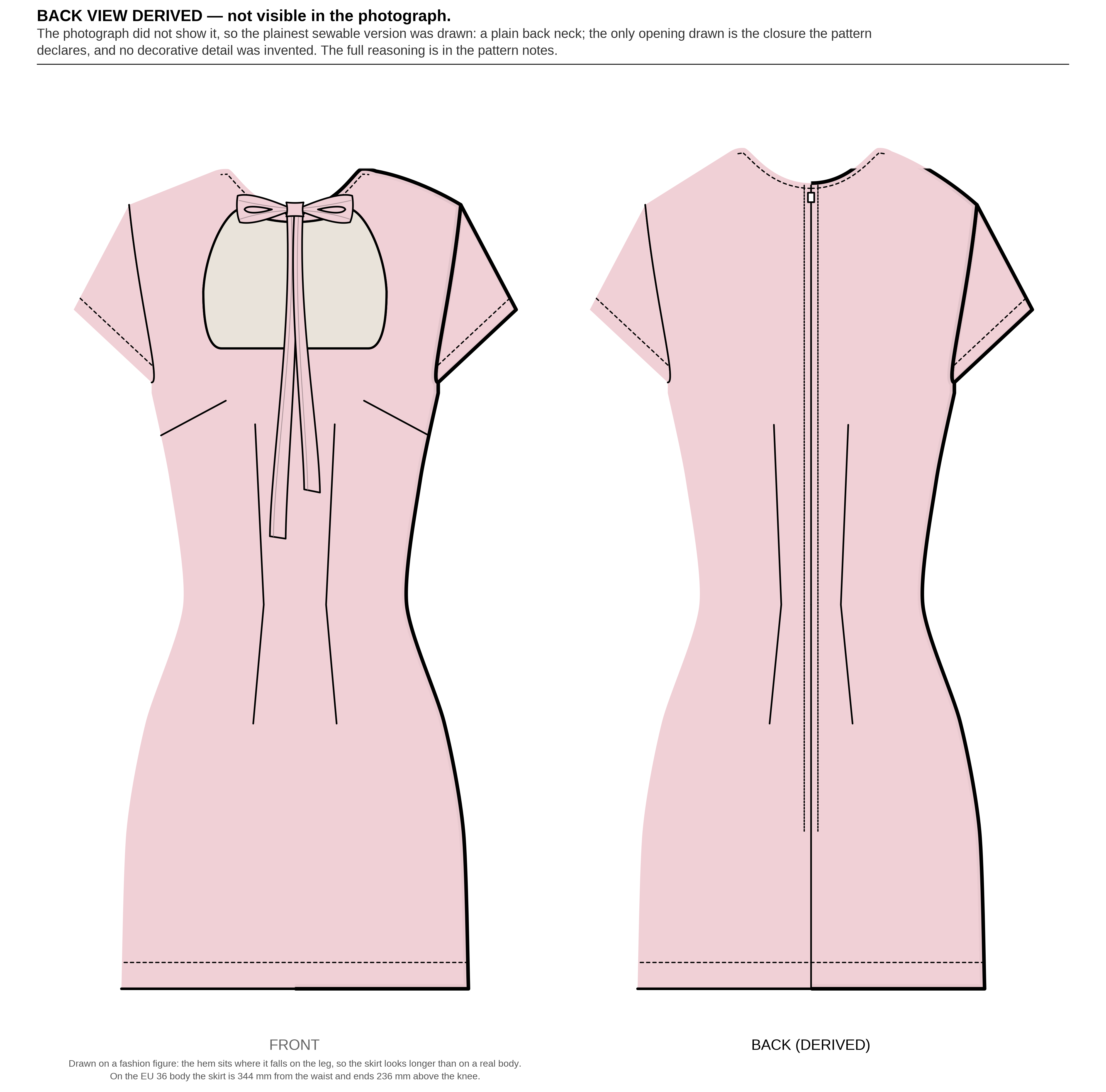
Pink bow keyhole mini
Side bust darts and a bound keyhole opening at the neckline.
-
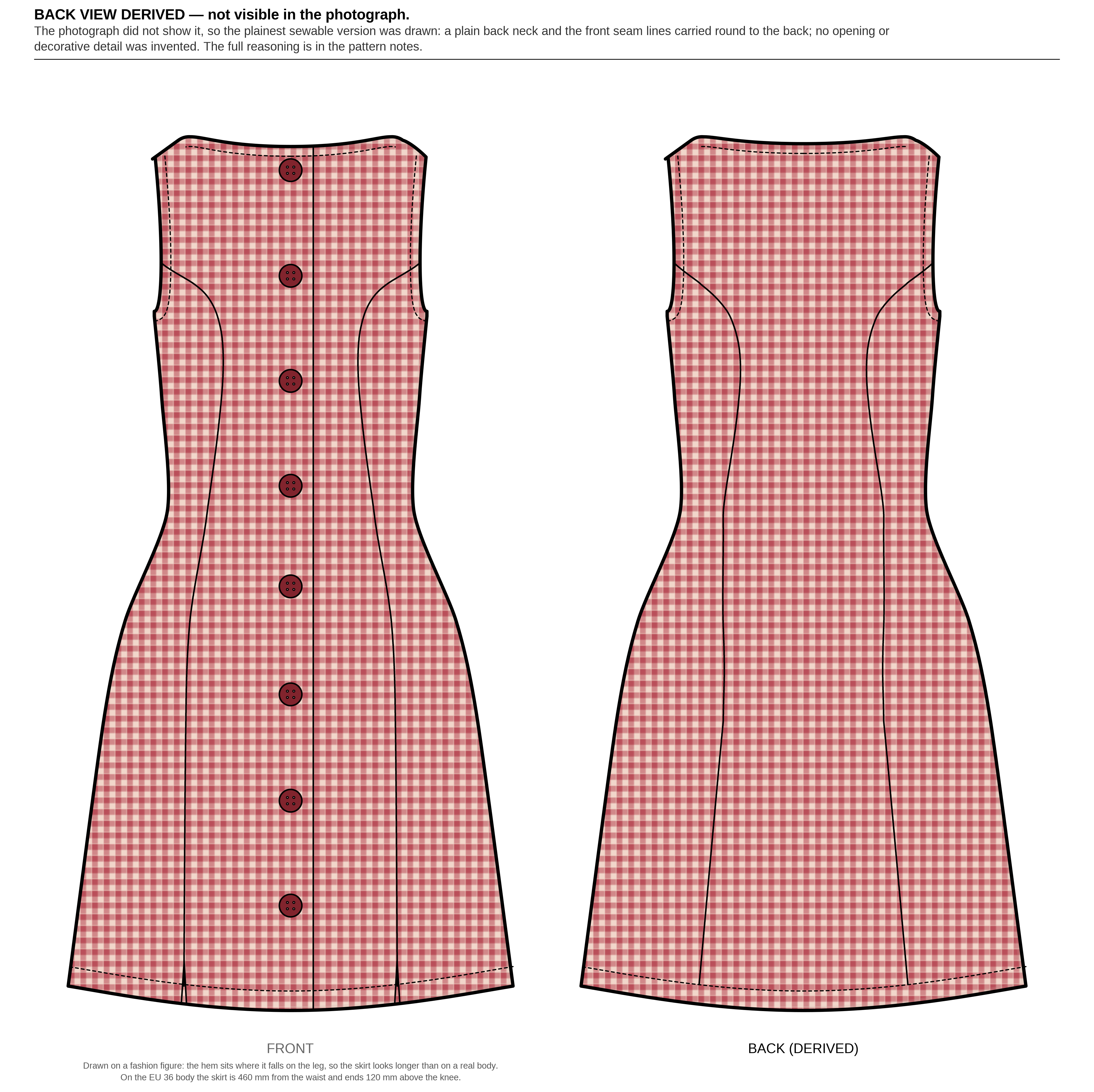
Red gingham button-front mini
Princess seams from the armholes to the hem, no waist seam, and eight buttons down the centre front.
-
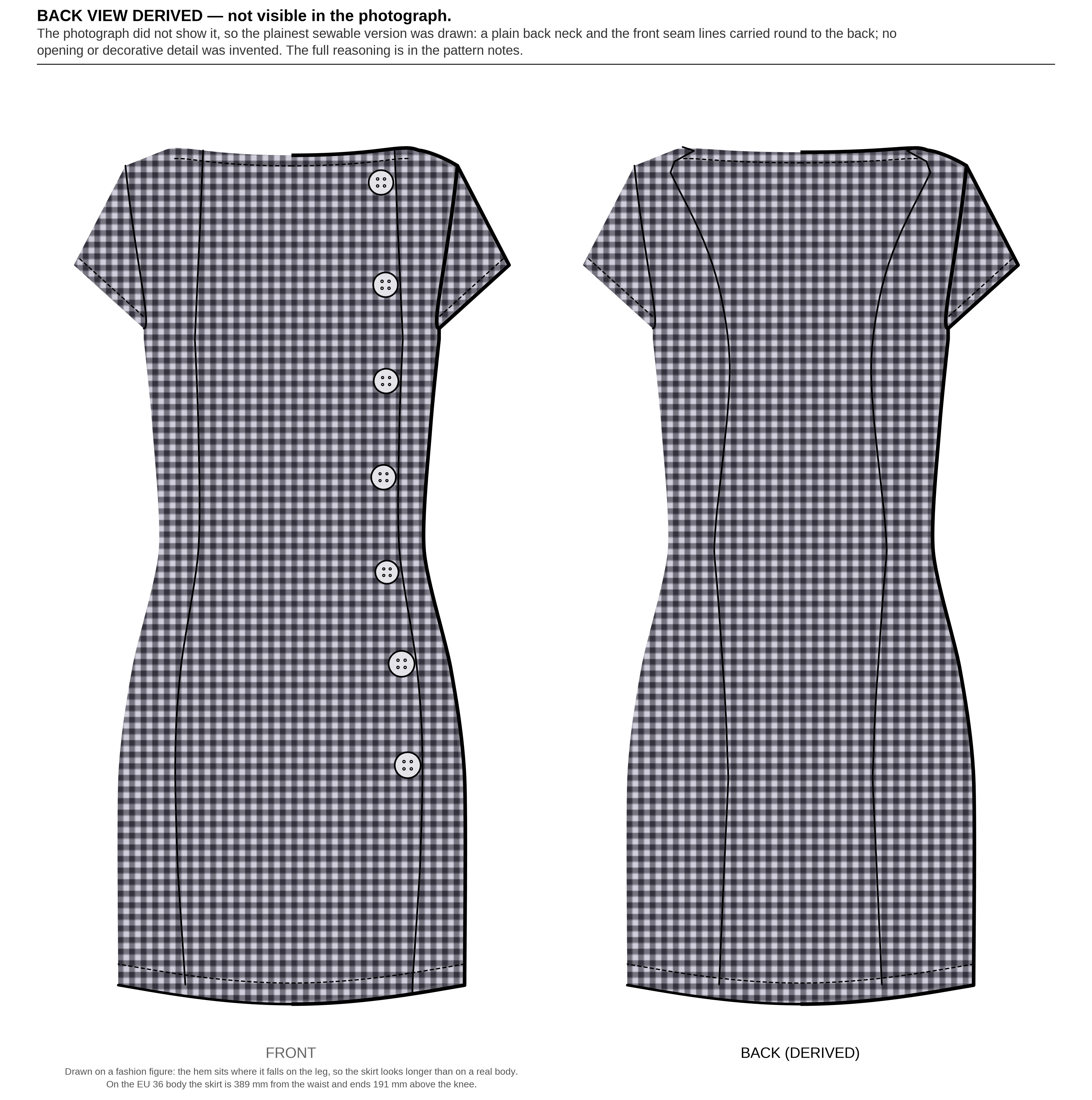
Navy gingham off-centre button mini
A straight mini with short sleeves and seven buttons down the left princess seam.
-
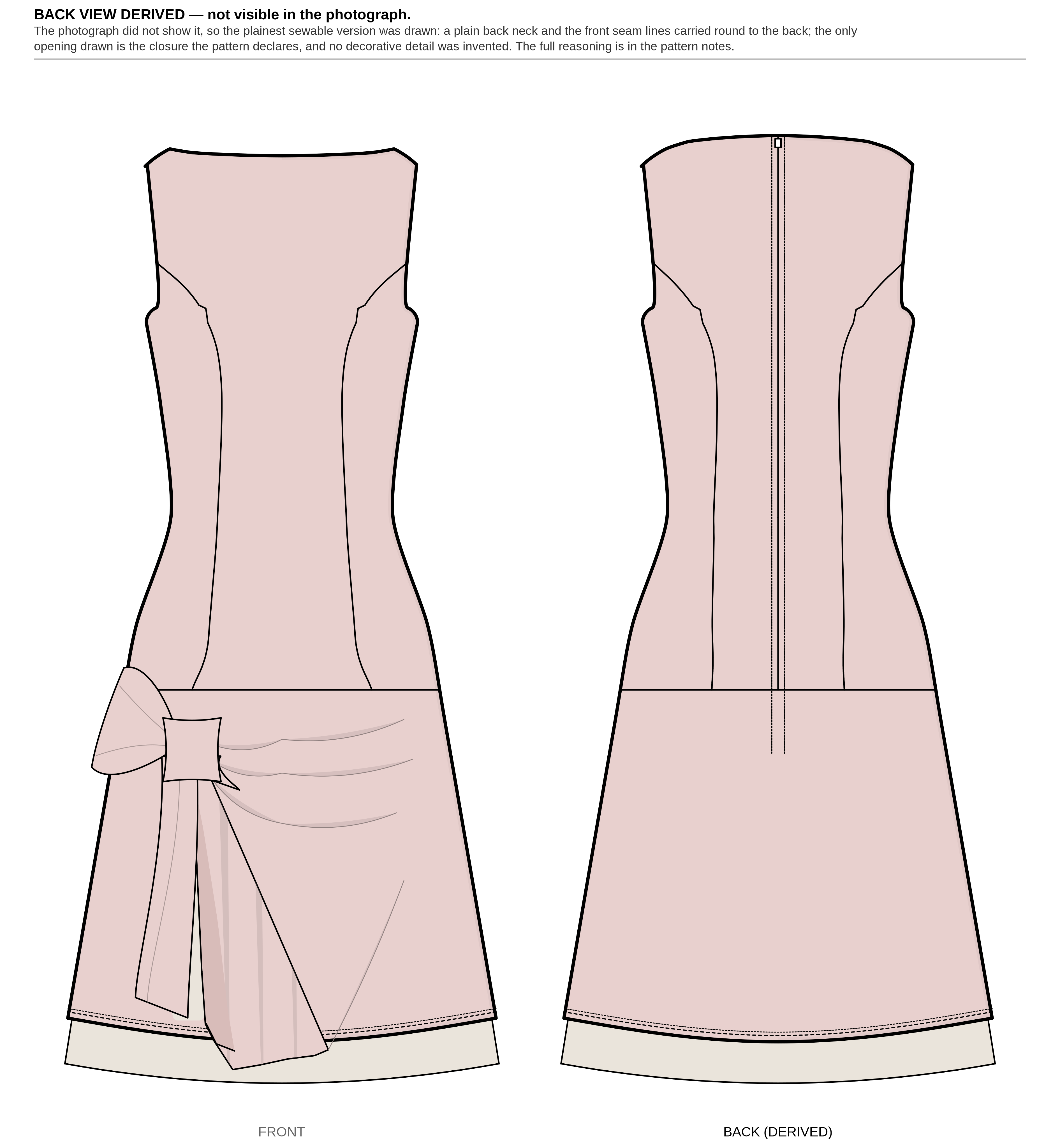
Pink bow wrap mini
Princess seams and a bodice fitted down to a seam low on the hips, under a wrap skirt.
-
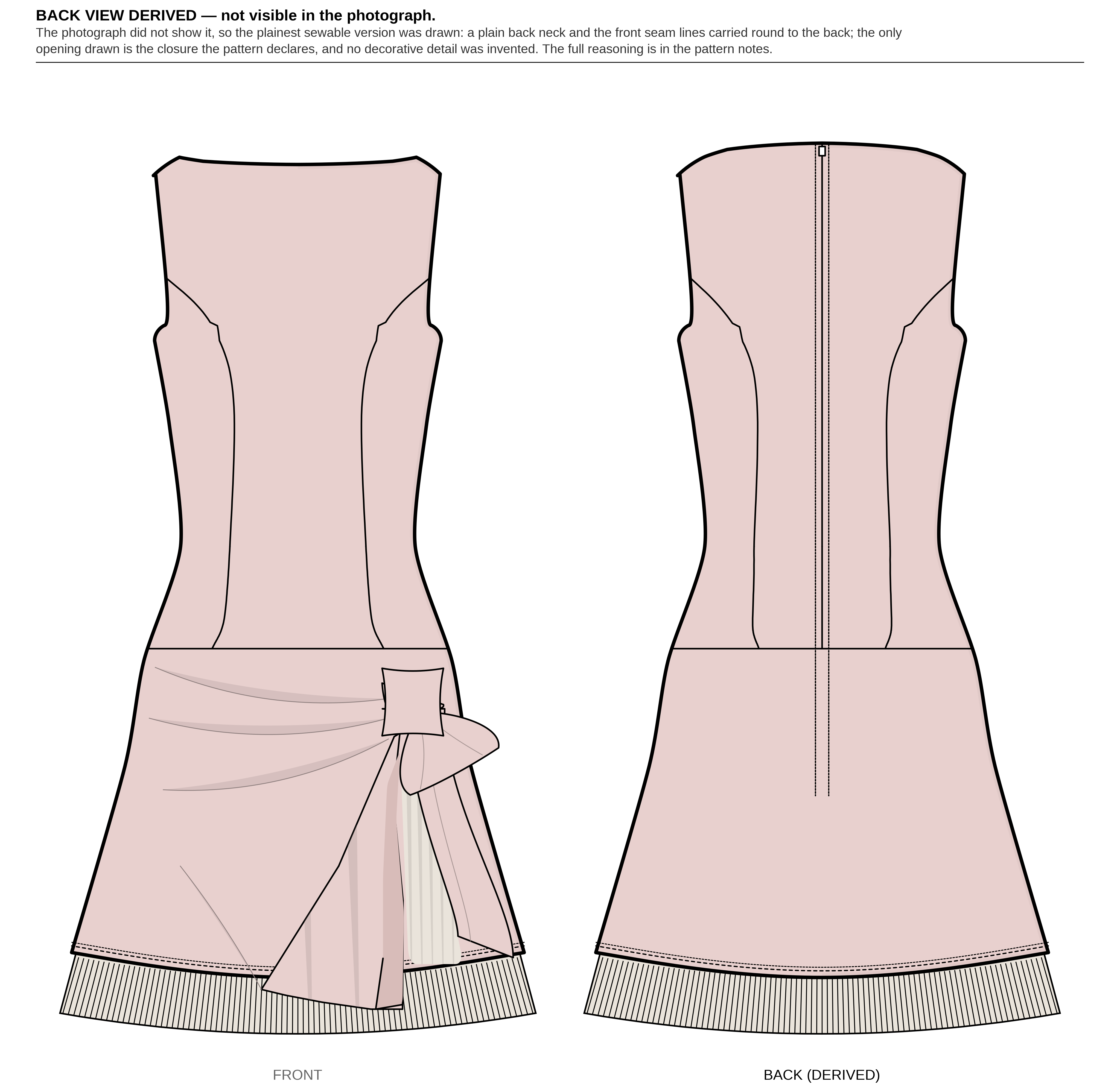
Pink bow wrap mini with a pleated underskirt
The same wrap mini with a sunray-pleated underskirt.
Fabric guidance draws on the University of Kentucky Extension guide Fabric Selection for Sewing and the weight ranges in Threads magazine; the order is the standard sequence taught by Aldrich, Armstrong and the Reader's Digest sewing guide.