A collared top, sewn.
A collar stand and a button placket only stand up on a fabric that presses sharp. The cloth matters, and the interfacing matters just as much.
Which fabric, and why.
For this shape, look for a crisp, medium woven that presses sharp. The collar stand and the placket fold need a fabric that takes a hard press; a soft viscose collar will not stand up.
| families | cotton poplin, shirting, linen |
| ask for | medium weight shirting, crisp, presses flat |
| trade-off | interfacing matters as much as the cloth: fuse a crisp interfacing to the collar and placket. |
Preshrink washable cotton and linen before cutting: wash and dry them the way you will launder the finished garment. Fabric sold as preshrunk shrinks very little.
More on fabric for this shape →
The order it comes together.
Build flat for as long as you can: every seam is easier to sew and press while the piece is still open. Close it into a tube (side seams, sleeves) only near the end.
- Prep. Check your measurements against the pattern, print it at true scale and measure the calibration square, cut every piece as labelled (on fold / cut 2), and make a toile first if the fit matters.
- Stabilise. Staystitch curved raw edges so they cannot stretch; fuse interfacing to facings, collars and plackets while flat.
- Shape. Sew the darts or princess seams and form the gathers first, while each panel is still flat and single.
- Flat add-ons. Work plackets, keyholes and back cutouts before the side seams close the garment into a tube.
- Neck finish. Sew the shoulders, then attach and understitch the facing, set the collar, or run the binding while it still opens flat.
- Close the tube. Sew the side seams, set in the sleeves, add the straps.
- Hem last. Try it on, mark, then hem; a half-circle hangs 24 h first so the bias drops before you cut it even.
Sewing tips for this garment.
- Fuse a crisp interfacing to the collar and the placket stand before you sew them; that is what holds them up.
- A womenswear front laps right over left; the buttonholes go on the right front, the buttons under the left.
- Place a mandatory button at the bust level so the front cannot gape open.
Button fronts in the free patterns
No stitchu sample has a collar yet. Two free EU36 dresses button down the front, and their cutting layouts ask for interfacing on the front facings:
-
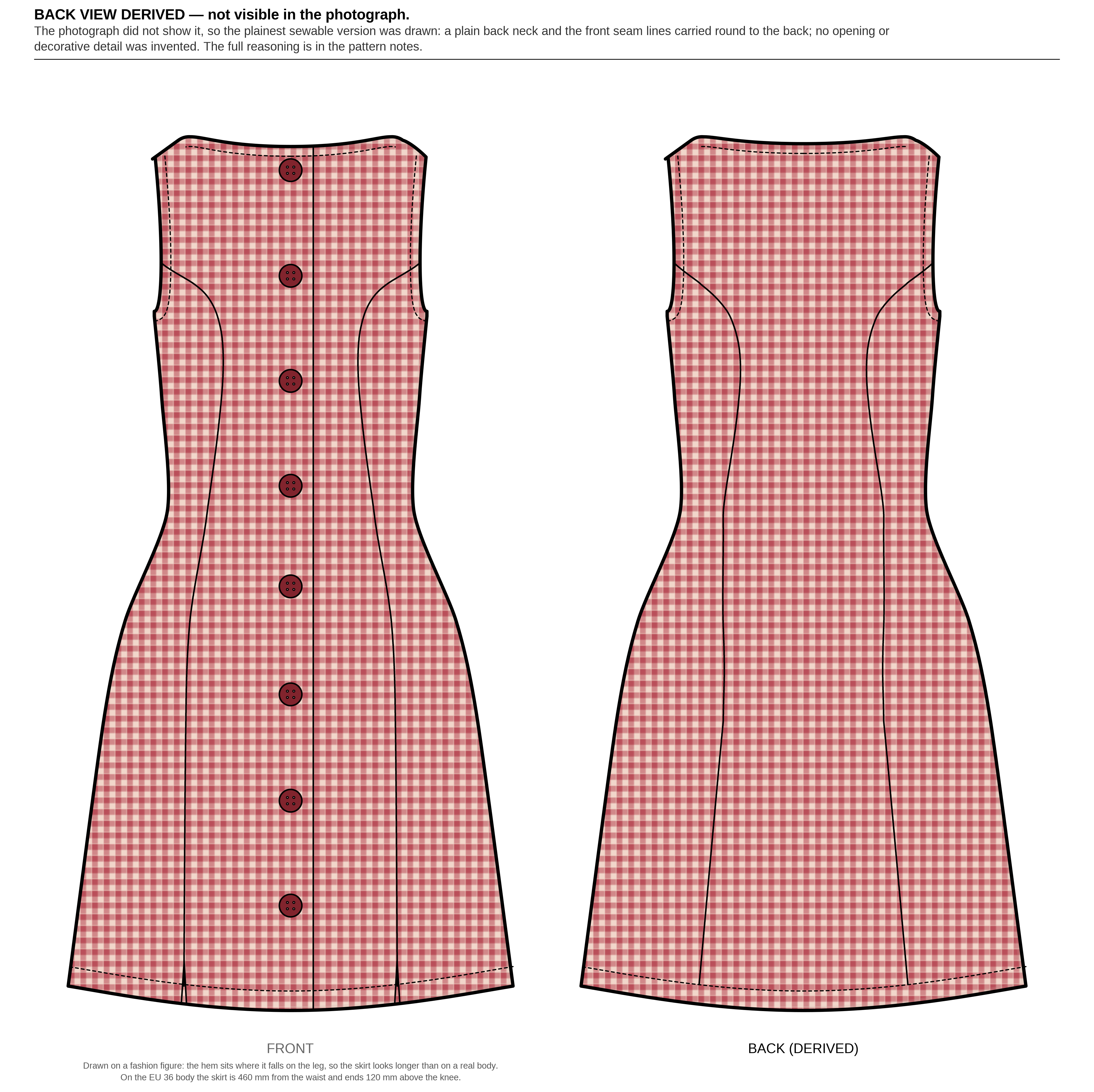
Red gingham button-front mini
Eight 22 mm buttons down the centre front, with facings cut in one with the front.
-
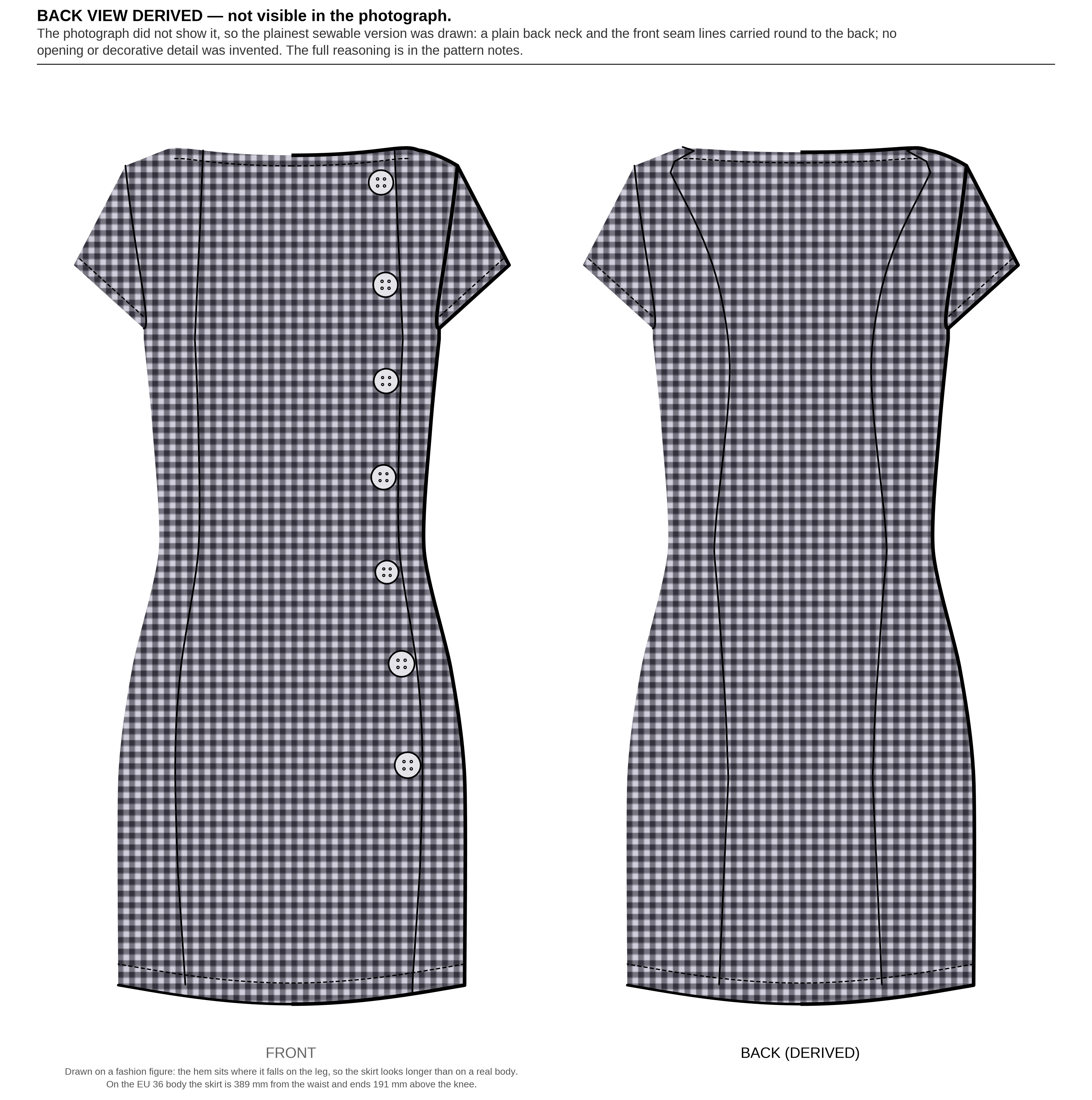
Navy gingham off-centre button mini
Seven buttons down the left princess seam instead of the centre front.
Fabric guidance draws on the University of Kentucky Extension guide Fabric Selection for Sewing and the weight ranges in Threads magazine; the order is the standard sequence taught by Aldrich, Armstrong and the Reader's Digest sewing guide.